


Our tips for running in the mountains
Have you ever felt out of breath from the very first steps in the mountains, even though you felt in top form when you arrived? It’s not a lack of training, but simply the altitude that’s to blame.
Running at altitude fundamentally changes the way your body responds to exertion. Although it’s more demanding and can sometimes be confusing, this type of training can be a real catalyst for progress if you understand how it works and adapt your approach. Your guide to mountain running is below!
Why is running at altitude more difficult?
The higher you climb, the lower the atmospheric pressure becomes. In practical terms, each breath provides you with less oxygen than at sea level. Your body must therefore compensate to continue supplying your muscles, which results in an increased heart rate, faster breathing and a greater sense of exertion, even at a moderate pace. From 1,500 metres, these effects begin to be felt, and they become increasingly pronounced as you continue to climb.
This phenomenon is known as hypoxia, which is a relative lack of oxygen in the body. To continue producing energy, your body has to adapt, and that takes time. That is why your performance drops at first: you aren’t any weaker; you’re simply in a more demanding environment.
How the body adapts: what really happens
The good news is that your body doesn’t just sit back and accept this situation: it adapts! As the days go by at altitude, your body will, in particular, increase its production of red blood cells – the cells responsible for transporting oxygen in the blood. In this way, your body improves its ability to capture and distribute the available oxygen.
At the same time, your respiratory efficiency improves and your muscles learn to make better use of the oxygen available to them. These adaptations happen gradually, which explains why you start to feel better after a few days. And that’s really motivating!
This also explains why many endurance athletes use altitude as a training tool. Once back at sea level, where the air is richer in oxygen, your body performs better. And that’s also why athletes living at sea level who are preparing for a mountain race spend a few days acclimatising before the big day!
How to adapt your training at altitude
After reading this, you’ll no doubt realise that running at altitude is a skill that needs to be learnt! The first rule – and undoubtedly the most important one – is to accept that you’ll need to slow down. Yes, we can hear you saying, “That’s rubbish!” But if you try to maintain your usual pace as soon as you arrive, you risk tiring yourself out unnecessarily and jeopardising your acclimatisation.
The first few days should be devoted to an acclimatisation phase. Your primary aim is to allow your body to adjust. To do this, focus on basic endurance runs are ideal for supporting this process. You’ll find that how you feel improves gradually, usually after 3 to 5 days. You can then gradually reintroduce more intense training, whilst of course listening to your body. Altitude requires a more nuanced approach: it’s best to focus on how you feel rather than on pace or times.
The importance of hydration and nutrition
At high altitudes, the air is drier and you breathe more rapidly. As a result, you lose more water, often without realising it. Regular hydration is therefore essential to maintain your performance and avoid excessive fatigue.
Need a quick refresher on the subject? Head over and check out our article on hydration in sport !
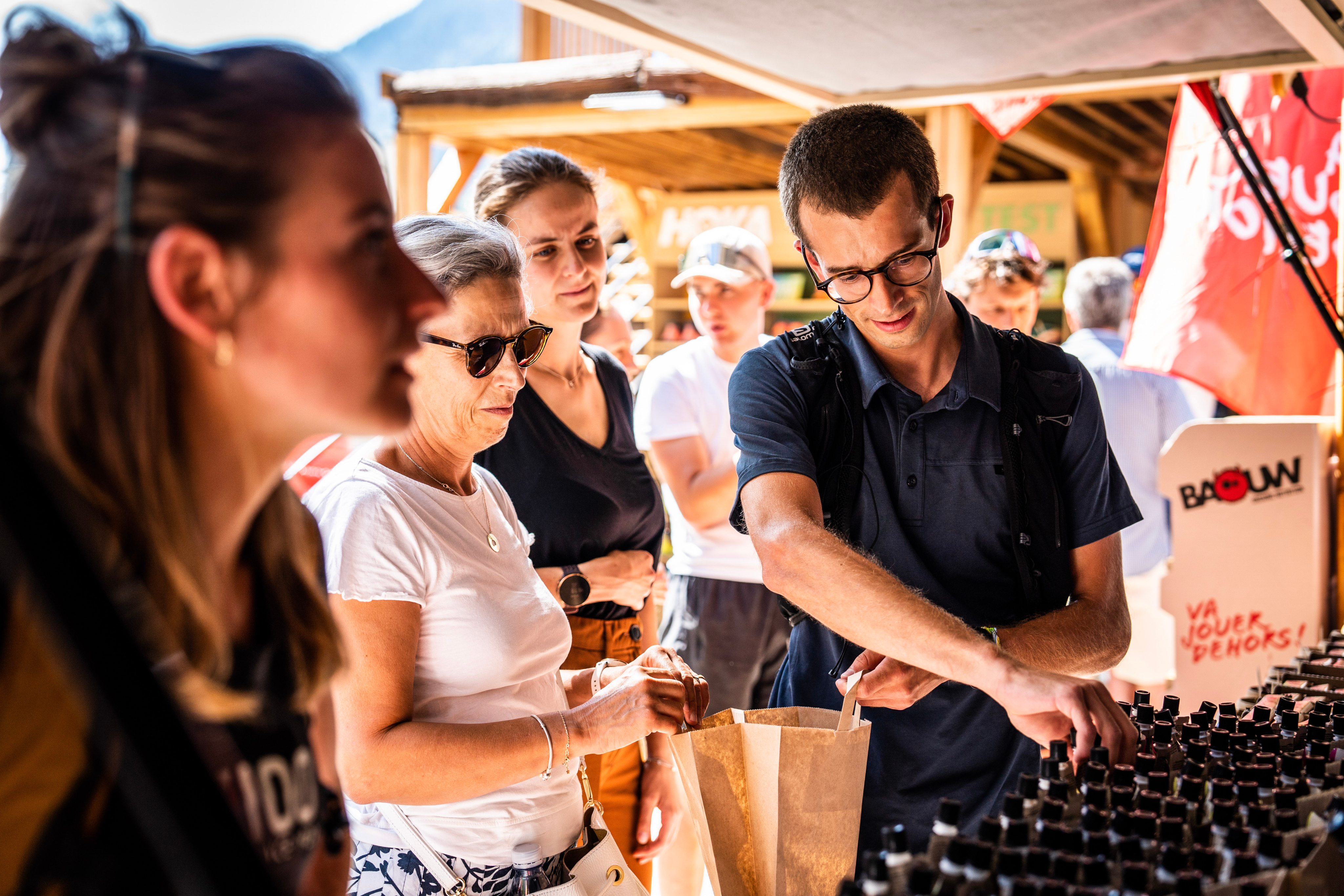
In terms of energy, your body also uses up more resources. The energy cost of the exercise increases, mainly because your body has to work harder to compensate for the lack of oxygen. You therefore need to provide it with enough carbohydrates to sustain the effort, whilst making sure you choose easily digestible foods. Fancy treating your taste buds at the same time? Dig out your best Baouw energy drink or energy bar !
The ideal approach: before a session, opt for simple, easily digestible foods. During exercise, especially if it’s prolonged, it’s important to replenish your energy regularly to avoid a drop in performance. After training, recovery is key, with a combination of carbohydrates, proteins and minerals to aid muscle regeneration. Once again, Baouw’s got you covered with our delicious recovery drinks are here to give your recovery a boost!
At what altitude should you run to improve?
Adapting to low oxygen levels is good, but making the most of it is even better! It’s also worth noting that the impact of altitude depends directly on the height at which you’re at. Let’s break it down into stages:
- Between 1,500 and 2,000 metres, the effects are noticeable but remain relatively moderate, making this a good altitude range for trying out this type of training.
- Between 2,000 and 2,500 metres, the physical adjustments become more pronounced and the potential benefits more significant, provided you already have some experience.
- Above 2,500 metres, the thinning of the air becomes much more pronounced, which increases fatigue and significantly slows down your pace. The body is under greater strain, even at rest, and the risk of altitude-related problems increases: headaches, sleep disturbances, loss of appetite, etc. At these altitudes, training must be even more gradual and controlled, with particular attention paid to recovery and the signals sent by the body.
It’s worth noting that acute mountain sickness isn’t limited to mountaineers tackling Everest or K2. It can occur at altitudes as low as 2,500 metres, most often following a rapid ascent. And mountain sickness is certainly no laughing matter, as it can, among other things, cause a feeling of euphoria that may lead you to put yourself in danger without realising it.
A quick guide to the right habits to adopt, from one peak to the next
Running at altitude can be very beneficial, but certain mistakes can quickly limit the positive effects, or even lead to significant fatigue. The most common mistake is to do too much, too quickly. Trying to maintain your usual pace or stringing together intense sessions from the very first days is not just ineffective but counterproductive.
It is also important not to underestimate the importance of recovery. As physiological stress is greater at high altitudes, your body needs more time to recover. Furthermore, do not embark on such a venture without knowing the basic safety rules for the mountains. This environment can be hostile and must be approached with caution and an awareness of its potential dangers.
High-altitude running: a powerful tool for optimising your performance at sea level
Running at altitude therefore offers a great opportunity to improve. By understanding how your body reacts and adapting your training sensibly, you’ll be well-equipped to make the most of this high-altitude experience, which also gives you a boost of new red blood cells as an added bonus!
Make sure you follow the steps carefully, listen to how your body feels, and manage your energy levels precisely. With this approach, there’s no doubt that the mountains will become your favourite place to get out and about! And once you’re back down in the valley, you’ll really appreciate that simple feeling: running becomes much easier.