

PRACTICAL WINTER CYCLING ADVICE
Winter is a key period in a cyclist's preparation. Here's a practical guide to getting through this transitional season and arriving on your bike stronger in the spring.
By Myriam Cornu-Nave, journalist, and Benoît Nave, osteopath-nutritionist and former top-level cyclist (pre-selected for the Barcelona Olympics in 1992).
PRACTICAL GUIDE / WINTER CYCLING
Contents
- Tip 1 Immunity for cyclists to combat winter ailments
- Tip 2 Lightness : the key to cycling
- Tip 3 Winter diet and weight gain for cyclists
- Tip 4 Change of equipment (bike, etc) and sports nutrition tests
- Tip 5 Physical preparation and training / Working on the fundamentals
- Tip 6 Sports to do in winter to perform well in cycling in spring
- Tip 7 Cycling position
- Tip 8 Objectives, how to set them correctly
- Tip 9 Cyclists' health
- Tip 10 Take inspiration from other cyclists
- Bonus The keys to success in cycling
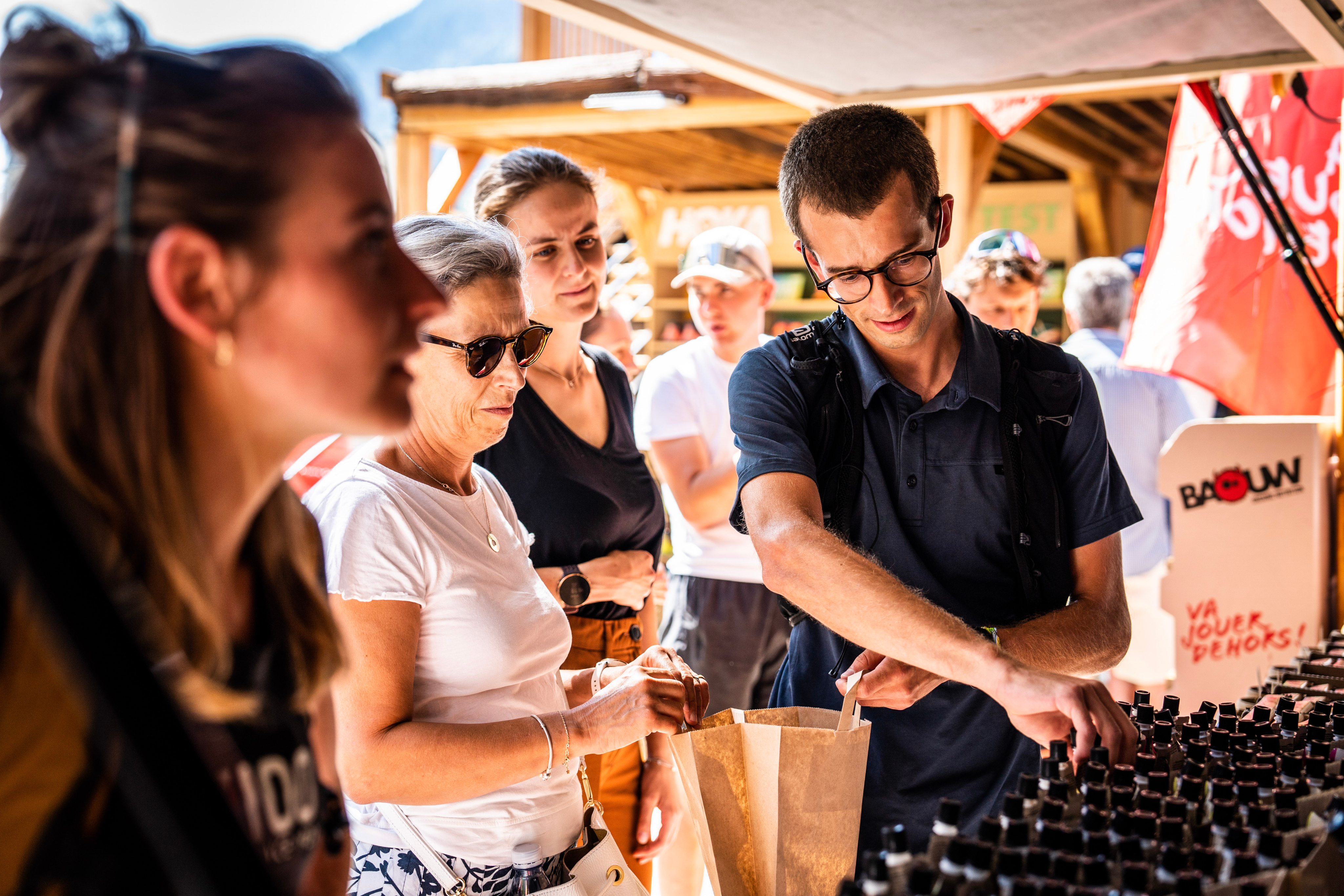
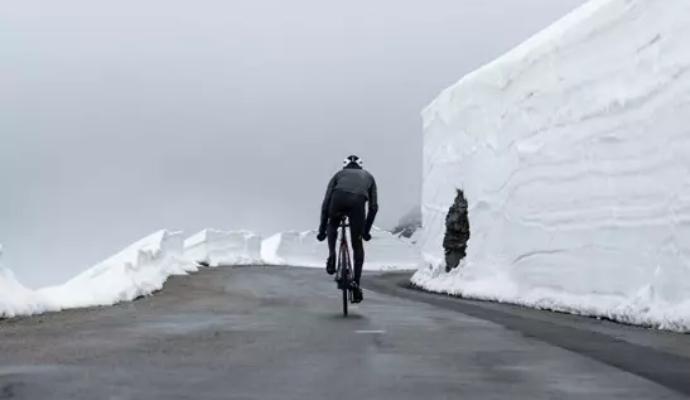
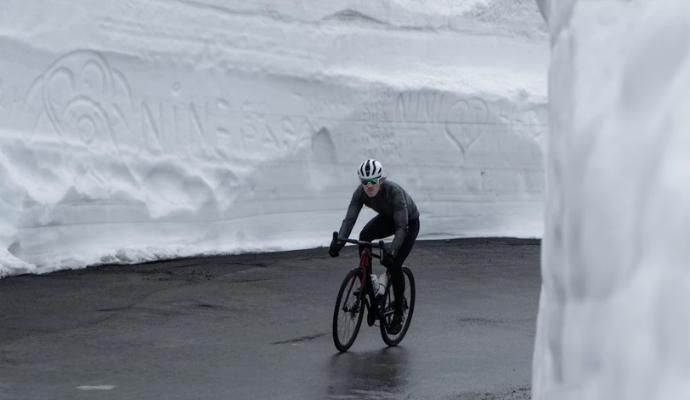
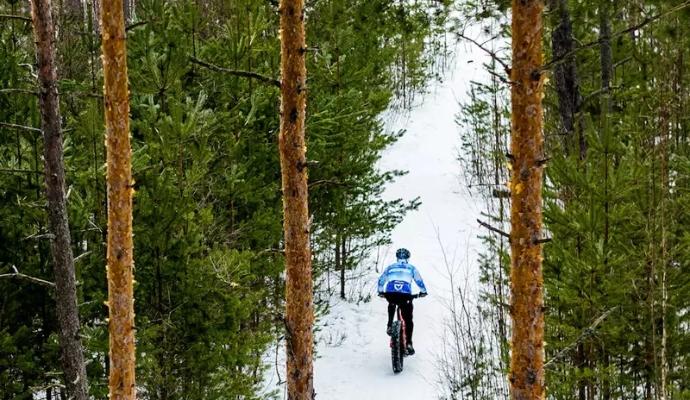
Riding in winter is great! It's ideal for your brown fat, and we'll explain why. But there are quite a few tips to keep in mind to prepare and train properly during the winter season. © maxime.visuals
CYCLING TIP N°1 / COPING WITH WINTER AILMENTS (AND THE CORONAVIRUS)
Winter is a time when we are more prone to getting sick: this is due to viruses floating around in the air and our immune systems being more sensitive.
‘Especially after the festive season, when our digestive systems are often a little overloaded,’ explains Benoît Nave, Baouw nutritionist and former top-level cyclist. ‘And when you consider the extent to which the digestive system is linked to our immunity...
The moral is: you shouldn't want to put in a series of major efforts on the bike just after the festive season, saying: ‘Oh dear, I'm going to lose the weight I put on during the festive meals at the end of the year!
Anti-virus tips
‘Winter is always a time when we're more susceptible to viruses. This year, it's the coronavirus, but we also have gastros, flu... At this time of year, we are less exposed to the sun, vitamin D levels are lower, we eat a bit more richly, etc. We need to strengthen our immunity by using little tricks. We need to boost our immunity by using a few simple tricks. And vitamin D supplements when you've had a check-up (don't forget to have your zinc levels checked too)'
CYCLING TIP N°2 / LIGHTNESS: THE KEY WORD WHEN CYCLING
At the height of winter, we're going to treat ourselves to a 10-day detox. Ideally, you'd do it just after the festive season, but that's still fine!
‘It's a good idea to cut down on your training sessions and your diet, ‘ recommends the former racing cyclist, who has coached some of the biggest names in cycling, including Simon Gerrans, Mark Renshaw, Cyril Lemoineand others.
‘As close as possible to the festive season and from now on, if you haven't already done so, you can plan a few days of detox.
‘Lighten up for ten days or so: advice for cyclists of all levels’.
‘We're going to lighten up the training. We're mammals, it's winter, so we're supposed to be a little less active, normally. Well, that's not really the case anymore with our modern lifestyles, but still. For ten good days of winter, we're going to reduce the volume and intensity. We're cutting the intensity sessions in half.’
During these 10 days of cycling detox, we will also be eating lighter. We will be eliminating meat and sugar.
Intermittent fasting, a great idea for cyclists
The extra super tip is to do a series of intermittent fasts during this 10-day cure.
Every other day.
- either have an early dinner at around 6.30 or 7pm and skip breakfast the next day (a carbohydrate-based dinner with raw vegetables, vegetables, soup and pulses).
- or have a good snack and skip the evening meal (carbohydrate-based snack, fruit purées, etc.).
‘If there's ever another confinement, this kind of cure is even easier to manage. But, in any case, it boils down to light training and light eating for 10 days.
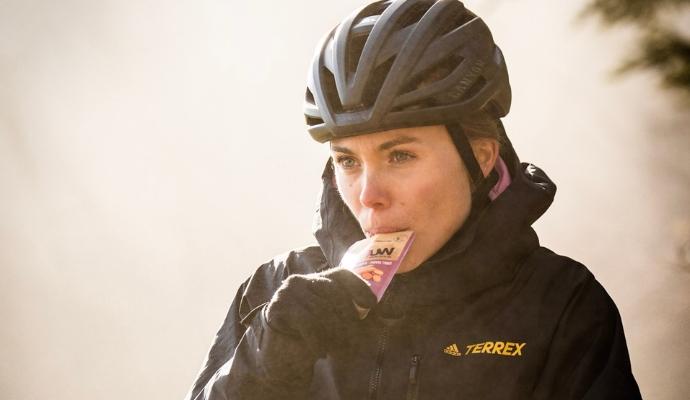
Ideal for cycling, our savoury energy purée is a great addition to your exercise nutrition package. There are two other recipes: Pear-Apple-Mint and Raspberry-Strawberry-Basil, neither of which tastes too sweet on the palate, making a welcome change! (No added sugar, just the sugar naturally present in fruit). ©focal_77
CYCLING TIP N°3 / WINTER FOOD AND WEIGHT GAIN
‘The traditional winter weight gain is not necessarily a bad thing,’ explains the nutrition expert, who is now an amateur cyclist. ‘It's obviously cooler in winter. So, from December onwards, we need a little extra fat to protect us from the cold. The groundhog effect.
‘So cyclists who continue to ride during the winter season, or who go cross-country skiing or ski touring regularly, are bound to accumulate a little extra brown fat, which makes perfect sense,’ says our in-house micronutrient expert. ‘It shows up a bit on the scales, but it's not serious at all. This fat will serve to
- protect yourself
- to provide the energy you need during outings when you're exposed to the cold and those when you're undergoing lipolysis’.
This little layer will disappear over the months and throughout the spring, when temperatures will gradually warm up.
How to eat (well) in winter
- Omega-3 fatty acids, high-quality fats, small oily fish, high-quality olive oil such as the one we have selected for our energy bars and compotes, which are available in our store.
“Eskimos are covered in brown fat and eat a lot of small, fatty fish, for example,” explains our sports nutrition expert, before continuing: "So, to sum up, when it comes to diet, we don't make any major efforts (except for a short detox period), and unless we establish healthy rituals to incorporate into our daily lives throughout the year, particularly by applying the
CYCLING TIP N°4 / CHANGING BIKES AND SPORTS NUTRITION TESTS
‘Winter is a period that can be devoted to changing equipment because you don't do much volume and no racing, so it's the ideal time to change your bike if you need to,’ advises our cycling expert. ‘It's the ideal season to improve or change what you need to improve on your equipment, and also to test your exercise nutrition.
Winter is obviously a period of reduced volume, with no races on the horizon in the short term, so it's a good time to change bike, saddle, crank length or any other adjustment...
‘ So that the body can get used to the new support points over a shorter period of time. For a few days, you need to think about planning sessions without high intensity, in addition to the reduced volume, so as not to cause injury’. And that's Benoit's biomechanical side talking ;)
Testing your exercise nutrition
‘We're also going to take the opportunity to test his sports nutrition. We'll be able to try out new recipes, see what works well during training, and test nutritional protocols.’
‘You'll also be able to establish habits, test your movements, the way you store and use sports nutrition products afterwards, on your bike.
Choosing the right fuel all year round is a real factor in performance, but also in general well-being. It's the right time to establish good habits, both in training and in competition !
CYCLING TIP N°5 / WORKING ON THE FUNDAMENTALS
Work on the points that you don't have time to work on at the height of the season, when you're really into it and enjoying the ride!
We take advantage of this period when, generally, we can't do very long rides to focus on quality. ‘After the 10-day detox period, we'll start again. We're going to work on the fundamentals of cycling and sport in general.
Working on the fundamentals means working on the elements that will enable us to effectively implement the quality or volume sessions that will come later in the season,’ says Ben, before adding: ’So, for example, we're going to train to develop explosive strength, strength, and incorporate very high-intensity sessions, to work on maximum power. Work on maximum power.
Work on all aspects of deep sheathing, general physical preparation and muscle strengthening.
‘They say you need 8 to 10 quality sessions in a specific area (for example, explosive strength or strength sessions) to be able to start getting interesting effects.
So we plan on two to three sessions a week over a 4-week block, with explosive strength dominating, for example.’
Example of a winter cycling training session
- If you can ride or are motivated to ride on a home trainer
Warm up thoroughly, about 15 minutes on the home trainer (about 30 minutes on the road).
Do a series of, say, 4-5 exercises (increasing as the session progresses). Start almost at a standstill, with the big chainring. With a very large gear. And one of the smallest sprockets. You start from 0 km and, over 7 or 8 seconds, you accelerate as much as possible in the seated position. You do everything you can to accelerate. You make an effort for 7-8 seconds and then recover for 4 minutes by pedalling calmly.
‘You need to recover almost completely to reintegrate creatine phosphate, which is the energy substrate for these very short efforts,’ advises Benoit. ‘You do it 4 or 5 times for the first time and you can gradually build up to 8 or 10. Not much more than that, as these efforts are very costly on the bike’.
Pour rêver un peu, découvre la courte vidéo de Nicolas Roux, ambassadeur Baouw (double vainqueur de L'Étape du Tour), sur sa Grande Traversée des Alpes.
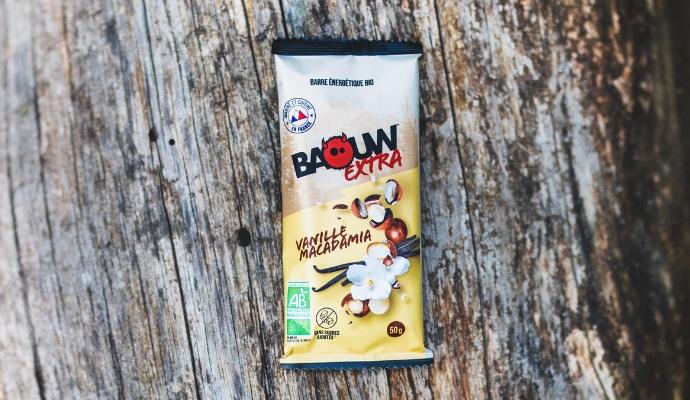
If you're familiar with the energy bars made by our cycling athlete Nicolas Roux, winner of the Paris Roubaix Cyclosportif, come and discover our 10 fruity or savoury recipes! I taste it !
CYCLING TIP NO. 6 / WINTER SPORTS FOR SPRING PERFORMANCE
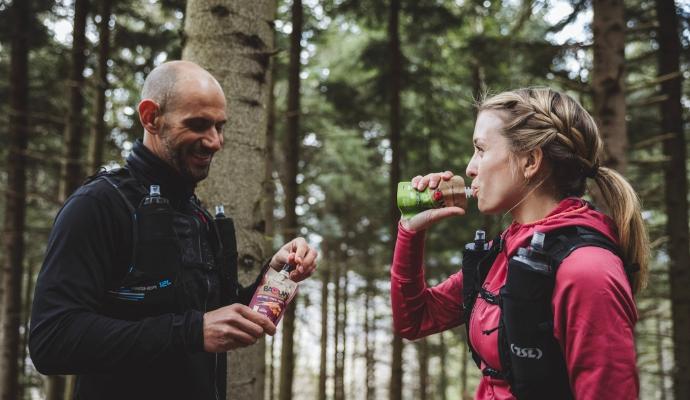
‘For those who like running and know how to run, running can be a great complement to cycling.
This helps to build up the strength in your legs, which cyclists generally lose over time," recommends Ben, a keen trail runner. Mountain biking is obviously a very good choice too for road cyclists.
And for those who live close enough to the mountains or can afford to do short training sessions in the mountains, I recommend cross-country skiing and ski touring. With ski touring at the top of the list. It complements cycling extremely well. Ski touring works on an essential component of a cyclist's performance: strength and endurance.
CYCLING TIP N°7 / AN EFFICIENT AND COMFORTABLE PEDALLING POSITION
‘I see a lot of riders in amateur pelotons who don't seem to have the right bike position to pedal efficiently. Or to protect themselves from injury.
And I see them end up in the surgery afterwards, with back pain, for example... tendon pain, tension in the shoulders...’ warns Benoit, who is also an osteopath.
How do you adopt the right position on your bike?
"Well... we all have our own unique biomechanical characteristics in terms of body shape, so it's difficult to give specific practical advice. I recommend consulting a professional who specialises in positioning.
There are a few in France, and I'm thinking in particular of Joel Steve, who works in a rather unusual way. I think it's a good solution.
Joel Steve works in collaboration with cycle shops and travels to these retailers in France. He makes his rounds all over the country and you make an appointment with him in your specialist cycle shop.
So hook up your bike shop to this great deal! (And don't forget to tell them about Baouw, if he doesn't already sell them, ha ha).
CYCLING TIP N°8 / HOW TO SET YOUR OBJECTIVES
Winter is an important time to draw up your annual plan so that you don't go off in all directions.
How do you set your goals?
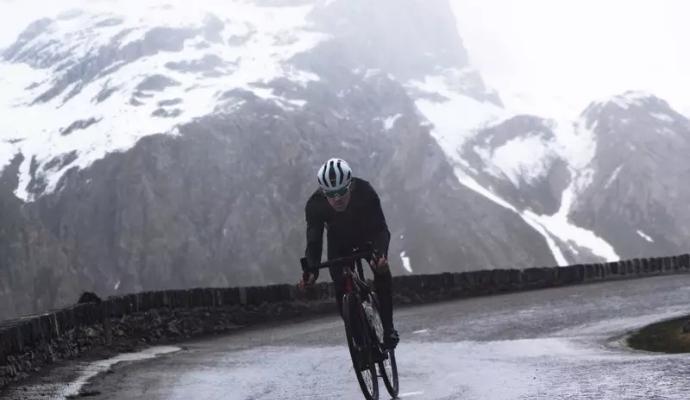
Whether in terms of competition or a more personal program: the Omomarto, the French Divide, the Haute Route des Alpes, a stage of the Tour, mountain passes, the Gran Fondo, but also a tour of France by bike, crossing the Alps, the Loire Valley by bike, the Euro Vélo 3 cycle route that crisscrosses Europe (from Trondheim to Santiago de Compostela) or any other great idea!
Setting real goals and keeping them in sight will help you to cope with regular training and not give up.
‘Having plans, especially in these gloomy times of coronavirus, when morale takes a hit, is essential.’
‘It's very important to do that, to set yourself goals, because that's also what's going to determine how you plan your winter training or your outings if you're not competing but you have cycling projects with friends or the kids, for example,’ stresses Benoît Nave.
‘Including very specific aspects. Let's say, for example, that you've planned an event this summer with multiple climbs or a route of this kind on a cycling itinerary. With fairly high average gradients. Given that, the strength endurance aspect is going to be a predominant element in the success of your event or your cycling project. Your objective. So you're going to have to think very early in the season about incorporating into your preparation everything that will help improve your strength endurance for D-Day. And that means working on it this winter, otherwise you're going to end up with your beak in the water, on your bike. It seems obvious, but well...’.
MY CYCLING COACH'S TIPS FOR SETTING THE RIGHT GOALS
My little tips for setting realistic but audacious goals.
- Focus on your strengths, not your weaknesses
In what areas do you perform best?
Are you a climber, a rouleur or a sprinter?
Determine the type of terrain on which you think you perform best and set yourself a target in that area. That way you can really enjoy yourself.
The key is to optimise your qualities in the chosen area.
- To set the right goals, this winter we're going to look back over the last few years and analyse how we've developed.
- Another part of the decision: choose an event that's completely new to you, in a field that suits you, on terrain where your qualities can shine through, in a place that's new to you, so that you're motivated by novelty, curiosity and the desire to discover.
by Benoit Nave, former coach to Simon Gerrans (Tour de France stage winner and yellow jersey) and Mark Renshaw (Mark Cavendish's pilot fish).
CYCLING TIP N°9 / CYCLISTS' HEALTH
This quiet period of winter is the ideal time to sort out all the little aches and pains, with the therapist of your choice: general practitioner, micro-nutritionist, osteopath...
Anything that recurs should raise a red flag. And be treated.
Cyclists' injuries, common complaints, tendonitis, recurring problems, chronic weaknesses. A nagging Achilles tendon, a knee, fatigue... A drop in motivation...
- If you suffer from chronic imbalances, whether in your immune system or your digestive system, if you often pick up little nasty things, it might be a good idea to consult a micro-nutritionist.
- If it's mechanical: go and see your GP, who will be able to point you in the right direction, or your osteopath.
TIP NO. 10 / TAKE INSPIRATION FROM OTHER CYCLISTS
Tip number 10: seek inspiration and gather information. Trade publications, YouTube, social media: winter is a good time to feed your mind in this regard. To acquire knowledge.
Not necessarily only on major races or only top-level cyclists (To relax, here's a short video of Jeune Cycliste Dynamique that we really liked. Very nice!)
Take inspiration from excellent cycling strategists to progress
We can analyse the use of pedalling cadences by Christopher Froome or Primoz Roglic, for example. These cyclists optimise their cadences as much as possible according to the level and duration of effort required on the bike.
We can see that when the power levels to be developed are very high, Roglich increases his cadence rather than increasing his gear ratio. You can reproduce this on your bike. Work on this. Improve the efficiency of your pedalling at high cadences’.
Cycling is a highly technical sport, and we mustn't forget that if we want to progress.
Learning, improving your skills and your overall knowledge will make it easier to practice your sport. And enable you to better integrate all the elements we've discussed above.
BONUS: THE KEYS TO SUCCESS IN CYCLING
Feeding the mind. ‘It's a point that's very dear to me and that I've used a lot with my athletes, not just in cycling, as I've also used it with Xavier Thevenard for the ultra-trail, for example. I get athletes to think about their race successes.
You have to dream about your races or your itineraries. You have to imagine your projects in your head, and then work out how to achieve them in detail. You can start visualising them a long time in advance.
This will help to sustain motivation when the sessions become difficult.
The approach to mental preparation for cyclists
Take, for example, the objective for the season that you've set yourself. You can visualise yourself on this event, at the key moments of the competition, seeing yourself pedalling with ease and getting over the passes and obstacles in the best possible conditions. You can see yourself riding with a smile on your face and enjoying it.
The power of our brain is incredible! It creates what we want. In a quiet moment or in the evening at bedtime, you can visualise an ideal race or a dream Alpine crossing. .
You imagine yourself in ‘flow’ (a theme dear to Baouw: those moments of ecstasy when everything works like a dream, that state of grace). .
It works at all levels and for all sports. Including the sport of life!" concludes Benoit Nave, a happy and accomplished cyclist.
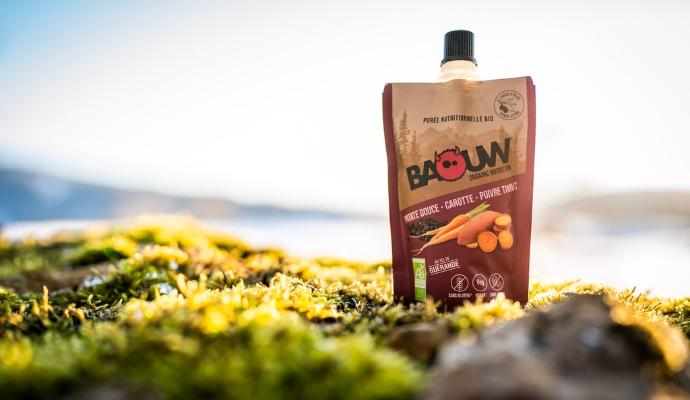
Discover Sweat potato - Carrot - Timut pepper puree. 'It's ideal for winter cycling, with its slightly denser texture and its warming flavour when you're cycling in cold weather‘, recommends nutritionist Baouw, 'We also like to switch from ”sweet’ tastes to this original Guérande salt product when we're cycling’.
THE AUTHORS OF THIS PRACTICAL GUIDE FOR CYCLISTS IN WINTER
Benoît Nave, nutritionist (European Diploma in Micronutrition, Food and Health Prevention from Paris-Descartes University) and former racing cyclist.
A former racing cyclist, he has coached some of the biggest names in cycling, including Simon Gerrans, Mark Renshaw, Maxime Bouet and Cyril Lemoine, and worked with mountain bikers such as Cadel Evans, Anne-Caroline Chausson, Kashi Leuchs and Christoph Sauser, all of whom hung a bunch of medals around their necks back in the days of the Volvo Cannondale mountain bike team!
Read teamOlivier Haralambon, ow editor-in-chief of the French Cycling Federation's magazine,France cyclisme. (link fédér)
Myriam Cornu-Nave, journalist specialising in outdoor sports.
Photos credits : Seb Jarrot, Baouw baouw, Le cycliste tricolore@maxime.visualsfocal_77(follow on Instagram)