

Nicolas Roux's 10 expert tips to help you perform well during the traditional Étape du Tour
Winning it is an achievement, doing so twice is a real tour de force. Our Baouwer Nicolas Roux achieved this feat in 2012 and 2013, after three consecutive second places. He also holds the record for cycling the Tour du Mont-Blanc (330 km and 8,000 m of elevation gain) and crossing the Alps from Thonon-les-Bains to Nice (646 km, 17 passes and 16,000 m of elevation gain) in 26 hours and 10 minutes, at an average speed of 25 km/h, gives you his advice on sports nutrition and shares his nutrition plan with you so that you can succeed in the Étape du Tour next July. From Briançon to Alpe d'Huez, from the famous Col du Galibier to the Croix de Fer: each edition gives pride of place to legendary mountain passes and climbs! Nicolas shone in the Étape du Tour and now offers you his advice so that you can do the same.
Tip #1 before the Étape du Tour: ‘Find your ideal weight-to-power ratio’
When it comes to cycling, especially in the mountains, with long climbs up passes such as the Galibier or Alpe d'Huez, weight-to-power ratio is key. It's a crucial factor in cycling, but one that is often subject to exaggeration. You shouldn't obsess over your ideal weight, just find the right ratio without overdoing it. When I was younger, I made the mistake of losing too much weight. I certainly felt lighter, but I had no strength left. My performance was much worse! To find that feeling of well-being and balance, I recommend trusting your instincts rather than the number on the scales!
Tip #2 focused on pre-race nutrition: ‘protein for breakfast’
From my long career, I have learned the crucial importance that must be given to the sportsman's breakfast. This is the most important meal of the day, the one that fuels your body without adding weight, since you have the whole day ahead of you to burn it off. At this point, it is particularly important to ensure you get enough protein, as it is absorbed much better and more efficiently in the morning!
Tip #3 for preparing for the Étape du Tour: ‘Replenish your energy reserves after tough training sessions.’
In order to prepare for the Étape du Tour, you will inevitably have to go on long rides or do sometimes intensive training sessions that will require your body to draw on its reserves. For my part, I am particularly careful to replenish my glycogen stores by consuming carbohydrates quickly and regularly after these difficult training sessions. This vigilance increases as the event approaches. Then, when it's time to ease off ahead of the Étape du Tour, to ensure I'm as fresh as possible on the day, I try to eat fairly lightly so as not to overload my body with toxins. However, my diet is not draconian, it's just balanced and integrated into my lifestyle. I've never felt constrained by sacrifices.
Tip #4 from Nicolas Roux: ‘My pre-race dinner and breakfast’
The night before the Étape du Tour, I have dinner at 7 p.m. Rice – much easier to digest than pasta, which is processed and therefore more glutinous – chicken and possibly a beetroot salad. I go to bed around 10 p.m. and wake up at 5 a.m. if the start is at 7 a.m. I then have a breakfast that is similar to what I eat every day:
- deux œufs ou une tranche de jambon
- a few nuts or almonds
- a piece of Comté, as it is a fairly low-fat cheese that I enjoy
- wholemeal bread
- a cup of tea.
Sometimes, for bigger events, I supplement with a homemade sports cake made with coconut milk, coconut flour and soya milk!
Stage of the Tour, tip no. 5: ‘Start with slow-release carbohydrates, finish with fast-release carbohydrates.’
It is essential to eat from the very first hour of the race. Of course, your glycogen reserves are still full, but the key is not to start using them up too early. Eating allows you to preserve them for as long as possible and use what you ingest directly as fuel. With this in mind, since the intensity of the effort will increase as the climbs get steeper, I plan to start with savoury energy bars and protein bars in the Col du Galibier, then move on to fruity energy bars in the Croix de Fer, and finally, to end with the energy purees in l’Alpe d’Huez, to go "full gas" to the finish line.
Want to learn more about managing your reserves and glycogen? Our article dedicated to energy reserves is waiting for you!
Tip #6 for the Étape du Tour: ‘Be patient, especially for this mountainous edition!’
To succeed in the extremely mountainous 2012 Étape du Tour, with nearly 5,000 metres of climbing, patience was an essential quality. Getting overexcited before the final climb to Alpe d'Huez would have been a serious mistake. The idea was to climb the Galibier at a steady pace, around 140 or 150 heartbeats per minute, then the Croix de Fer at a slightly faster but comfortable pace, around 160 heartbeats per minute, and the Alpe d'Huez at maximum effort, averaging over 180 heartbeats per minute... The strategy: save some energy to go all-in on these legendary hairpin bends.
Tip #7 from Nicolas Roux: ‘Take advantage of descents to focus on nutrition.’
Whether you're competing in a stage of the Tour or training, when riding downhill, the concentration required to follow the trajectory and the impression of ease due to the low level of physical effort mean that you can quickly lose focus... It's fun, and you let yourself get carried away. As a result, it's easy to forget to drink and eat! Be careful, because you'll pay for it as soon as you start pedalling on the next climb, with a feeling of heavy legs. The classic scenario when you lack experience is to realise, only at that moment, that you haven't eaten anything in a long time... Unfortunately, it's already too late... It will take a good twenty minutes for the good feelings you inadvertently let slip away to return!
A topic we explored in an article: the importance ofhydration in cycling !
Tip #8 for the Étape du Tour: “Anticipate Alpe d'Huez” (or its equivalent!)
In 2011, I finished second in a Étape du Tour, which was already judged by Alpe d'Huez. What I learned from this experience was to anticipate this climb as best as possible from a nutritional point of view! The idea, in order to achieve a satisfactory performance, is to be able to give your all on this legendary climb, to be at full throttle! But when you're at full throttle, you hydrate, you drink, but it's harder to eat. For example, during my 41-minute climb in 2011, I didn't eat anything. On the other hand, I optimised my nutrition by condensing my energy intake, eating a lot on the long false flat that leads to the foot of the climb. Basically: eat well before the Alpe, so you can give your all during the climb!
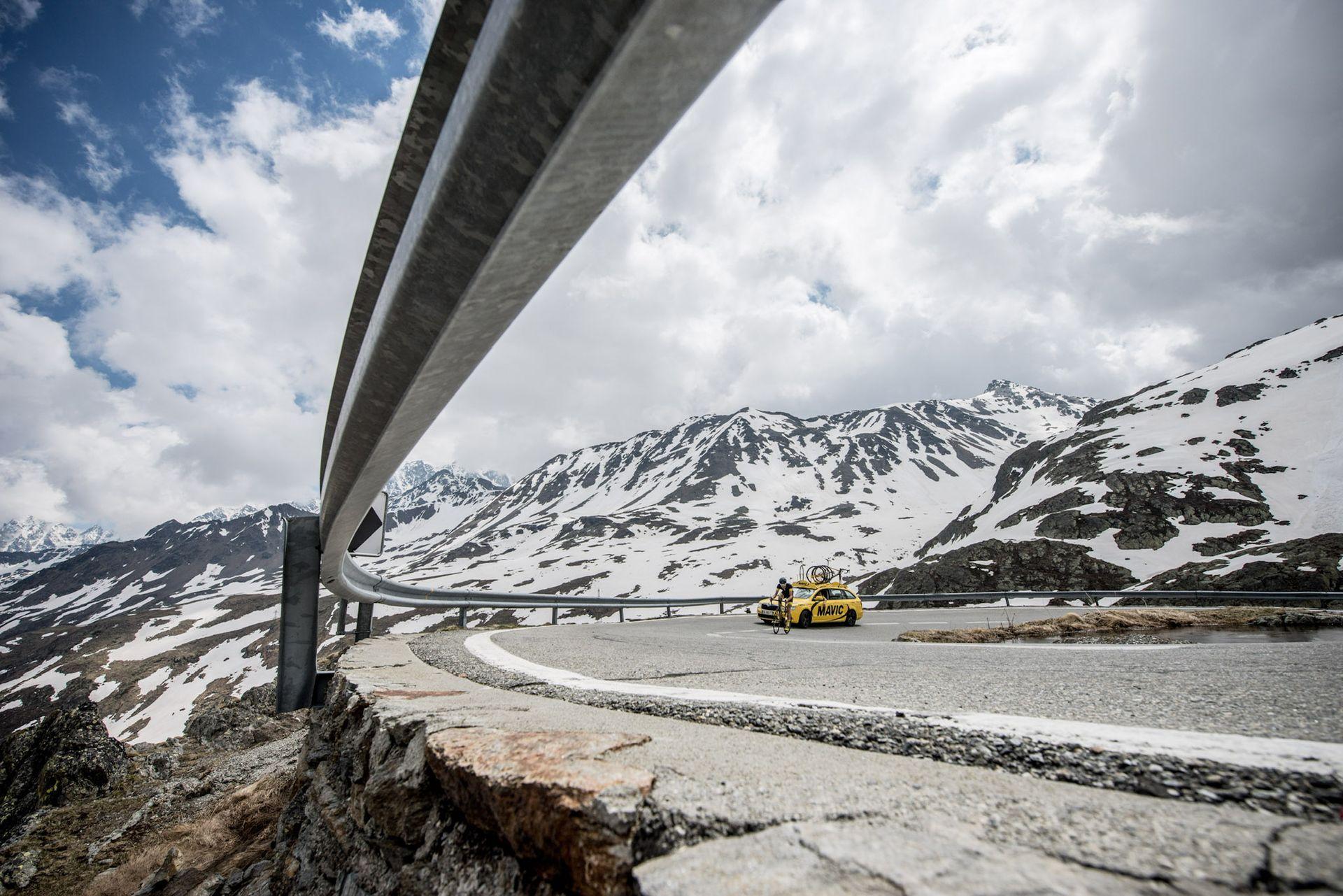
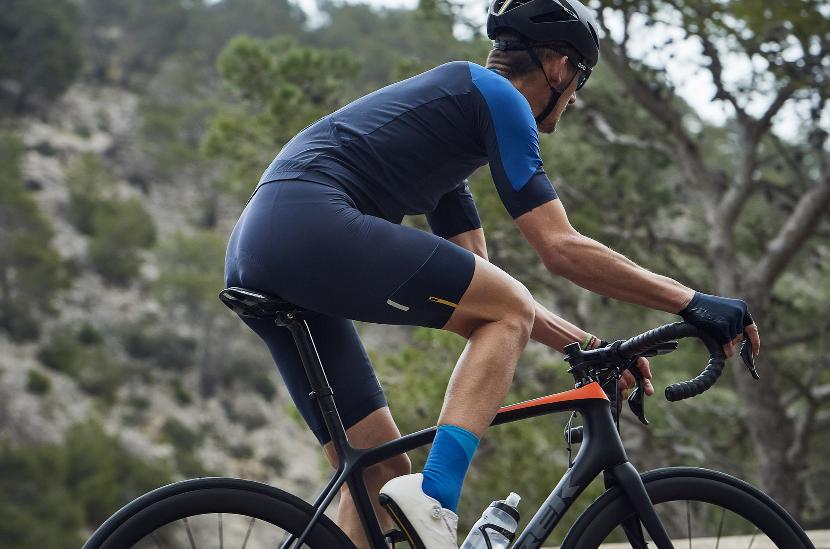
Tip #9: “Pedal downhill”
This is characteristic of cycling: a sport where the intensity of effort varies greatly, unlike trail running, for example, where your heart rate remains fairly high, even when going downhill. To avoid ‘falling asleep’ and giving your body the impression that the race is over after the first climb, I recommend forcing yourself to pedal downhill. Keep your legs moving so that they continue to turn smoothly and not jerkily when the road starts to climb again.
Last but not least, tip #10 for preparing for the Stage: ‘adapt your nutrition and hydration to the altitude’.
Altitude will have a key impact on the Étape du Tour. During the 30th edition in 2022, the Col du Galibier, rising to 2,642 metres, and the Col de la Croix de Fer, perched at 2,067 metres, took the riders into hypoxia above 2,000 metres, where the air is thinner. Whether you are acclimatised or not, this means adapting the way you eat. You need to eat more, because your energy expenditure increases, but above all you need to drink more, because the cool temperature makes you forget how quickly you become dehydrated up there.
The nutrition plan for the Tour stage, by Nicolas Roux
Nicolas Roux shares his nutrition plan followed during one of his Étapes du Tour stages, between Briançon and Alpe d'Huez.
- After 40 minutes: 1 organic protein energy bar
- After 1 hour and 10 minutes: 1 organic energy bar
- After 1 hour 40 minutes: 1 organic energy compote
- After 2 hours and 10 minutes: 1 organic energy bar
- After 2 hours and 40 minutes: 1 organic energy bar
- After 3 hours and 10 minutes: 1 organic energy bar
- After 3 hours and 40 minutes: 1 organic energy bar
- After 4 hours and 10 minutes: 1 organic energy bar
- After 4½ hours (on the flat section leading to Alpe d'Huez): 1 organic energy compote
- After 4 hours and 45 minutes: 1 organic energy compote
- After 5 hours: 1 organic energy compote.