Being an athlete and diabetic: an impossible combination? Not according to some athletes, who have managed to turn their passion into a professional career despite their diabetes! Gary Hall Jr. has won multiple medals in swimming, Kris Freeman has achieved exceptional performances in cross-country skiing, Wasim Akram has made a name for himself in the world of cricket, and Kasper Dolberg continues his rise as a professional footballer... all while managing their diabetes on a daily basis. So if you're a performance-oriented athlete, rest assured: although diabetes is something to be aware of, it is not incompatible with intense sporting activity. However, as an athlete, it is useful to have some knowledge of nutrition for optimal diabetes management.
Furthermore, it should be noted that 90% of diabetics have type 2 diabetes! In other words, these people developed diabetes as a result of their eating habits. However, it is estimated that 80% of them could have avoided it. Why, and how? Which eating habits are harmful? What should be done? Can we enjoy the benefits of sports nutrition at the heart of Baouw products (no added sugar) if you are diabetic? How can you combine high-level sport and diabetes? All the answers from our nutritionist Benoît Nave, who has a degree in Micronutrition, Food and Preventive Health (Paris-Descartes Faculty of Medicine).
Type 1 or type 2 diabetes: what every diabetic athlete needs to know
What is diabetes? Definition!
Diabetes is a sustained increase in blood sugar levels. The danger is that when this condition persists, it causes damage to many structures.
Causes of increased blood sugar levels
‘Blood sugar levels are regulated by the secretion of insulin. Insulin opens the door of the cells to let in glucose, which is the source of energy that can normally be used directly. In type 1 diabetes, the organ that secretes insulin (the pancreas) is mute. It no longer secretes insulin,’ explains Benoît. In the case of type 2 diabetes, it is the target cell that is deaf (= that no longer responds to insulin).
The differences between type 1 diabetes and type 2 diabetes
Sporty, yes, diabetic, yes, but what type? In fact, there is not just one type of diabetes, but several, which need to be distinguished. Type 1 diabetes: you cannot protect yourself from it and it usually strikes during the early years of your life. Type 2 diabetes, on the other hand, is different. It is an acquired form of diabetes. "This is mainly due to poor eating habits over many years, aggravated by a sedentary lifestyle. In short, eating and lifestyle habits that promote inflammation and block lipolysis. Added to this are certain nutritional deficiencies (chromium, vitamin D, omega-3 fatty acids, etc.) and/or an imbalance in the gut microbiota," explains Benoît, Xavier Thévenard's sports coach.
In other words, if you've become sedentary, hop to it! Get motivated every day, put on your trainers and start running again or ride your bike!
"It's also linked to epigenetics. And therefore to poor gene expression (a genetic predisposition that only manifests itself when certain environmental triggers are present: diet, lack of exercise, stress, etc.). But in the vast majority of cases, patients have control over their fate with this type of diabetes. So nothing is lost in advance, we must remain hopeful but take matters into our own hands!" says Benoît Nave. ‘How can we prevent the development of this disease, which has been rampant in recent years? That is the subject of this article on prevention,’ explains Ben, the Baouw nutritionist. Type 1 diabetes is insulin-dependent. It is an autoimmune disease. Type 2 diabetes is the result of insulin resistance. If we are not careful, the two can even combine over time.

Products
Focus on type 1 diabetes
It is an autoimmune disease that can develop very early on, either during the first few months of life or a little later, following an emotional shock, for example. Your pancreas no longer produces enough insulin. ‘It is quite often linked to an immune reaction to cow's milk proteins,’ says Benoît Nave.
When it comes to treatment, you have little choice but to carry insulin with you. Many diabetic athletes are turning to insulin pumps, which consist of a small device connected to a cannula under the skin and equipped with sensors that automatically deliver insulin based on blood glucose levels. Want to learn more? Feel free to check out our article on the glycaemic index and sports!
Focus on type 2 diabetes
The symptoms are identical but more insidious, as they appear much more gradually. The same signs as those of type 1 diabetes may appear: you will also feel very thirsty, very hungry, and need to urinate very frequently, among other things.
If your type 2 diabetes is treated early enough, a strict dietary rebalancing, correction of micronutritional imbalances and an appropriate lifestyle (including regular exercise) can sometimes help to control this type of diabetes.

Are you a type 2 diabetic athlete? Take action with prevention!
We strongly urge you to do everything possible to balance type 2 diabetes, which would otherwise progress to type 1 (insulin-dependent). It is also very important to balance type 1 diabetes (which would otherwise become insulin-resistant and therefore difficult to control with insulin injections).
To do this, you will need to focus on diet, which is an essential factor in the daily comfort of diabetics, as well as on physical activity.
How can you avoid diabetes and enjoy peace of mind as an athlete?
Obviously, avoid anything that contains pure sugar: cola, soft drinks, fruit juices, sweets, confectionery of all kinds, commercial chocolate bars (such as those with melted chocolate and caramel, etc.).
But we also avoid...
- pizzas, pastries
- industrial bread, white bread (as a reminder, a baguette = 55 sugar cubes)
- puffed cereals or industrial cereal flakes (Benoît Nave's clarification: ‘once in a while, as a snack, why not... Especially after exercise, sport or any intense activity. In short, after muscular exertion’).
- yoghurt and cow's milk (which includes dishes made with cream, for example!)
To sum up, generally speaking: all processed, refined foods. You can add to that certain harmful combinations, such as the potato and red meat duo (steak and chips, hamburger and chips), which are very insulin-secreting!
Products
Are you an athlete with diabetes? Baouw takes care of your health... and your performance!
Sport, diabetes and physiology
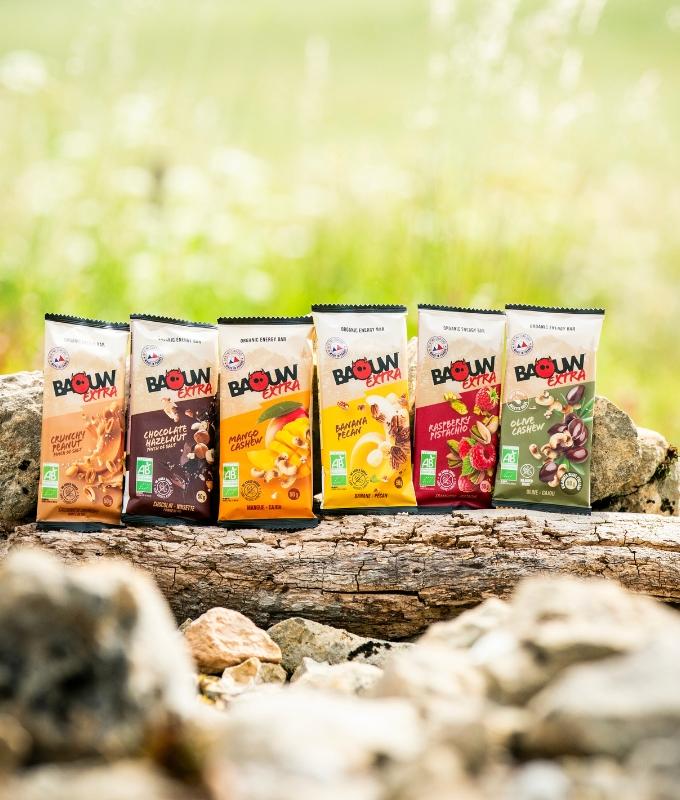
“When you provide your body with healthy fats (omega 3), when you take care of your gut, when you consume enough fibre, when you have sufficient levels of vitamin D and vitamin A (we would like to remind you of the importance of vitamins for athletes !), if your diet is sufficiently rich in vitamin B, you significantly reduce your risk of developing type 2 diabetes. That's what we do at Baouw, in our bars. The carbohydrate intake is very balanced thanks to their fat, protein and fibre content. Our 50g non-protein purees and bars have no added sugar. They only contain the sugar that is naturally present in fruit.
Our advice on using Baouw for athletes with type 1 or type 2 diabetes
‘For type 1 diabetics, I advise against consuming them outside of exercise, as they still contain fruit sugar,’ recommends Benoît Nave. ‘For type 2 diabetics, a Baouw bar (none of which contain added sugar) can be added to a snack that ideally consists of fresh fruit (rich in fibre and water), a handful of nuts and seeds, and a Baouw bar.’ And, of course, people with type 2 diabetes can eat them during and after exercise (during recovery, for example).
Products
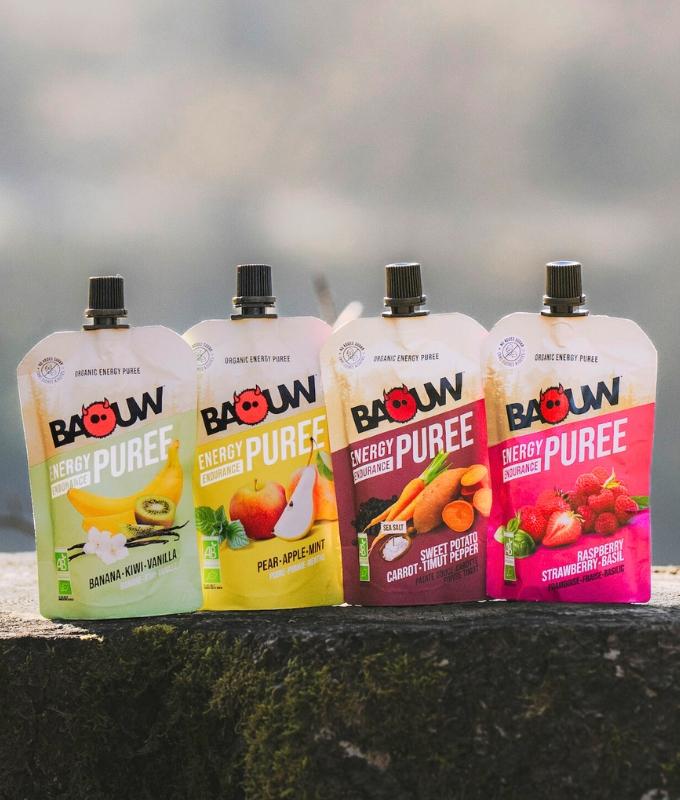
DIABETES AND BAOUW PUReES
How does Baouw control the glycaemic index of its bars?
The answer from Benoît Nave, our nutritionist! "A product made solely from raw ingredients (fruit and oilseeds) will always contain fibre in significant quantities. Refining removes fibre. This loss throws any product off balance. This fibre (which is natural and found in all plants) allows for the PHYSIOLOGICAL diffusion of the carbohydrates contained in the food. Without it, the glycaemic index increases significantly. This is why our bars DO NOT cause blood sugar spikes. And therefore no energy crashes afterwards!” QED.
Diabetes and Baouw purées: what does that mean?
“I recommend our energy purees during exercise, for diabetics,‘ advises Benoît Nave. ’These are not compotes: they do not contain sugar. The sugar intake is very, very smooth. Our Raspberry-Strawberry-Basil purée, in particular, has a very moderate glycaemic index." What's more, according to certain scientific studies, raspberries can help reduce blood sugar spikes in people with insulin resistance (previously known as ‘pre-diabetes’). These anti-diabetic properties are due to the anthocyanins, ellagitannins and fibre they contain. Try them for a peaceful sporting experience!
There's no reason to resist! Whether you're a diabetic athlete who exercises intensively or moderately, or simply a beginner getting started with gentle exercise, exercise and stretching sessions, Baouw combines indulgence with health.
This advice is provided for informational purposes only and is not a substitute for medical advice. We recommend, of course, that you consult a healthcare professional if necessary.