
How much should you drink, and when, during your 10km run?
During a 10km run, hydration is often overlooked, even though it directly affects your energy levels, your pace, and your enjoyment of the run. Over a short distance like this, it’s tempting to think, “I’ll have a drink at the finish line.” However, poor hydration is enough to cause a drop in performance, even over a relatively short distance.
Before we go into detail, bear this in mind: as soon as dehydration sets in – however mild it may be – your body has to compensate. And that’s when things go wrong: your heart rate goes up, you feel the exertion more intensely, and sometimes you get cramps during excercise or a loss of mental clarity. Not exactly ideal for achieving your goal! After setting out the ideal diet for a 10 km run, the Baouw team naturally brings you a focus on… hydration during a 10 km run!
Why is hydration so important during a 10km run?
Although a 10 km run often takes between 30 and 60 minutes, your body starts losing water through sweating within the first few minutes. This fluid loss depends on several factors, including the temperature, the intensity of the exercise, your fitness level and your own metabolism.
Indeed, proper hydration helps maintain a healthy internal balance. It supports blood circulation, facilitates the delivery of oxygen to the muscles and helps regulate body temperature, particularly when conditions become more demanding. It also plays a role in managing muscle fatigue and optimising the use of energy reserves. Quite a programme!
In other words, drinking properly means keeping your engine running from the start to the finish line.

Products
Focus on hydration before, during and after your 10km run
Before the race: plan ahead without overdoing it
It all starts well before the race begins. The first goal is to arrive well-hydrated and without any digestive discomfort. In the run-up to the race, make sure you drink water regularly, without waiting until you feel thirsty. Ideally, you should drink at least 1 litre of water 2 to 3 hours before the start, which gives you time to eliminate the excess through your urinary system. During the remaining 2 to 3 hours, drinking around 400 to 500 ml is more than enough to prepare your body. As the race approaches, a few sips are more than enough. The idea is to start the race hydrated, but light.
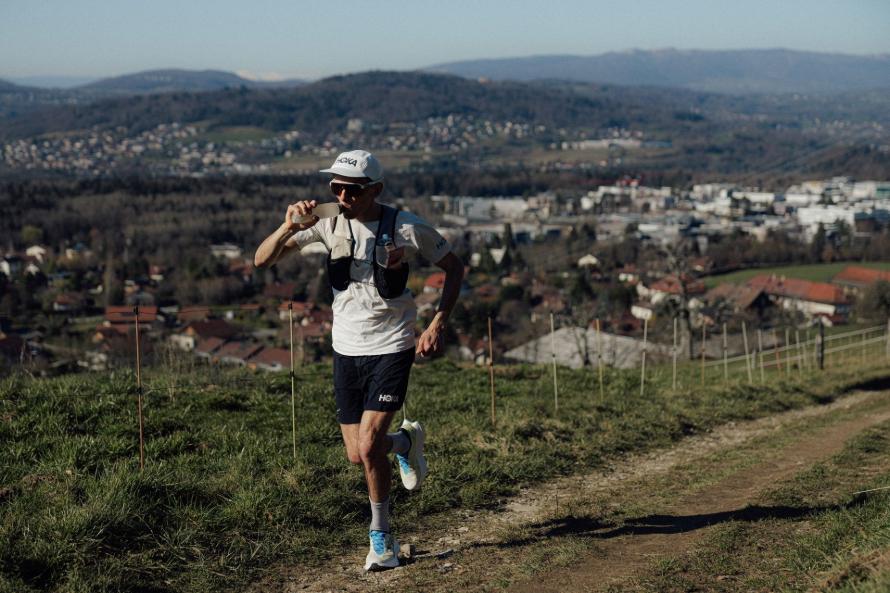
During a 10 km run: adjust your fluid intake according to the conditions
Over this distance, you don’t necessarily need to drink whilst running. If your run lasts less than 45 minutes, the fluids you’ve consumed beforehand are usually sufficient. However, if it lasts longer than that, or if it’s hot, a few sips can make all the difference.
The key is to avoid overdoing it. Drinking too much can make it hard to breathe or leave you feeling sluggish. Conversely, not drinking anything at all in hot weather can make you tire more quickly and increase the risk of injury. The right balance? Make the most of the 5 km refreshment station to treat yourself to a few sips!
After the race: getting back on track
Once your workout is over, your body needs to replenish the fluids lost through sweating and begin the recovery process. Drinking gradually over the next few hours helps restore your body’s fluid balance. Combining this hydration with carbohydrates and minerals also helps replenish your energy stores and reduce fatigue. The perfect combination? Our electrolytes tablets paired with one of our energy purees !
And if your 10K felt like a marathon and you need to give your muscle recovery a boost, our recovery drinks, which are incredibly thorough, are designed to pamper your sore muscles and help them recover faster.
Products
What drink should you choose for a 10K race?
For a 10K run, there’s no need to overcomplicate things. Water remains the simplest and most effective solution in most cases. When temperatures rise or the pace is fast, mineral-rich water, such as Saint-Yorre, can help replenish fluids lost through sweating, as can an electrolyte tablet added to your water bottle.
Isotonic drinks like our tasty lime isotonic drink, can sign up for a 10K race with challenging conditions, but they aren't essential for all runners.
However, if you don’t use isotonic drinks, your carbohydrate intake can also be supplemented with our energy gels. The key is to choose a drink that agrees with you and that you’ve already tested during training.
Common Mistakes to Avoid When Hydrating During a 10K Run
Certain habits can easily disrupt your run. Among the most common are:
- drink a large amount right before departure
- underestimating the importance of staying hydrated in hot weather
- try a new drink on the big day.
These details are far from insignificant, because when taken together, they directly affect your comfort and performance. As is often the case in sports nutritionIt’s the gradual adjustments that make a difference in the long run. Isn’t now the time to start thinking about marginal gains?
Hydration and performance: a great partnership!
In a 10K race, every detail matters. Training, of course, but also your ability to manage your hydration precisely. Testing your strategy during training sessions is an effective way to figure out what works for you. By simulating race conditions, you’ll refine your timing and build confidence for race day.
Just like any other aspect of your training, hydration requires planning, adaptation, and practice. The result? A smoother—and more efficient—10K run!