


Understanding running economy to improve your performance
Running economy refers to the ability to use the least amount of energy to maintain a given pace. Put simply, at the same speed, some runners tire less quickly than others… simply because they are more efficient. But there’s no point in getting frustrated, so we invite you to read this article to find out how to work on this concept!
Because in endurance sports – whether it’s running, cycling or trail running – running economy is a key factor. That’s why the Baouw team explains how to turn every stride into truly efficient movement.
Why is pacing so important in endurance sports?
Good running economy allows you to keep going for longer, whilst feeling more in control of your effort. Your body uses less oxygen, draws less on its reserves, and so fatigue sets in later. And all of this has a direct impact on:
- managing your energy reserves
- your ability to maintain a steady pace
- your recovery after exercise.
This link to energy is key: the better your body manages its fuel, the better your performance over the long term. Running economy is a bit like driving economically: you use less energy! This concept is in line with the spirit of marginal gains and therefore stands to benefit from optimisation.
A concept combining oxygen consumption, weight and pace
Running economy can be a very tangible and measurable concept. It is generally expressed in millilitres of oxygen consumed per kilogram of body weight per minute (ml/kg/min) at a given pace. The lower this value, the more ‘economical’ you are. In other words, your body needs less oxygen to produce the same effort, which translates into reduced energy expenditure.
This is precisely why two runners with a similar VO₂ max can perform very differently: the one with the best running economy will be able to maintain their pace for longer, whilst conserving their energy.
Factors affecting running economy, or how to improve it
Running technique: an often-overlooked factor
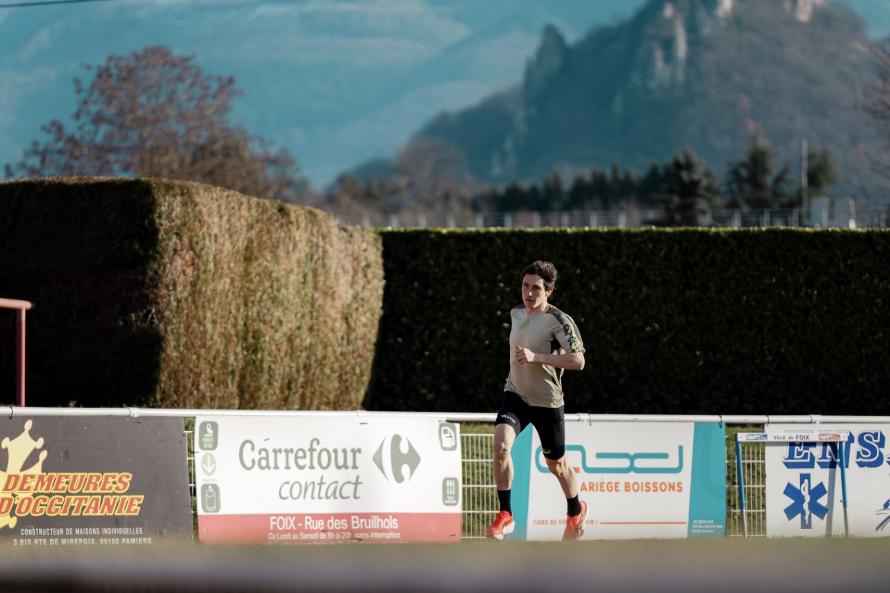
Let’s start at the beginning: your running style, which has a direct impact on your performance. What about your posture? Are your shoulders relaxed, and are you looking straight ahead? Are your strides too long? All these factors could be causing unnecessary energy loss, so it might be worth taking another look at them.
From your stride rate and posture to your foot placement and everything in between, every detail counts. Better coordination will help you minimise unnecessary movements and maximise propulsion.
Physical and muscular fitness
A strong, well-balanced body uses less energy to perform the same task. Strength training and core exercises help to stabilise your posture and improve force transmission. Over time, your body becomes more efficient in its movements, which translates into greater endurance.
Combining different disciplines is essential for success in running! Strength training isn’t just about pure performance; it also helps improve your running economy by making every movement more stable and efficient. Regular work on your legs and core helps minimise compensatory movements and better absorb the impact.
A quick tip on “breathing techniques during exercise”? Do have a read of our article “improve your breathing whilst running”!
Fuel supply and quality
You can’t talk about running economy without mentioning diet… especially as sports nutrition is our area of expertise. So let’s remember that what you eat directly influences the way your body produces and uses energy.
A balanced diet offers a host of benefits, as it helps to stabilise your blood sugar levels, prevent energy slumps and sustain your performance over time. Want to find out more? You’re in luck – we’ve already put together some detailed articles:
- What should you eat for a triathlon ?
- What should I eat before a 10km run ?
- What should you eat for a trail run ?
So, if you want to improve your running performance, there’s no secret to it: you need to look after your diet (and your sleep, incidentally)!
Running economy and recovery: in search of the perfect balance
Running efficiency isn’t just about what happens during the run. In fact, recovery also affects your ability to perform effectively in subsequent sessions. So, after your workout, put together meals designed to replenish your glycogen stores, treat yourself to one of our recovery drinks , and help yourself to a snack packed with antioxidants to minimise the oxidative stress associated with training.
The running economy in a nutshell: “run better to go further”
You can learn to do more with less! Nothing is set in stone in sport: by optimising your technique, your physical preparation and your diet, you can improve your performance without necessarily increasing your training volume. This is particularly useful during busy periods when you have less time to exercise! Whether you’re a beginner or just starting to run again, you’ll find your running economy improves quite quickly (you’ll see, it’s incredibly satisfying!). If you’re an experienced runner, however, you’ll need to be just a little more patient, as the progress won’t be as obvious. But I promise, it’s coming! Ready to make every stride more efficient?